What Makes a Good Cold Storage Warehouse Design
A good cold storage warehouse design ensures that temperature-sensitive products stay fresh, safe, and profitable. Industries like food, pharmaceuticals, and logistics depend on these facilities every day. A poor design can waste energy, increase product loss, and raise costs. A well-planned warehouse reduces temperature fluctuation and improves workflow.
Smart Layout Planning
The first step in a good cold storage warehouse design is planning the layout. A well-organized layout reduces temperature loss and improves logistics. Designers divide the warehouse into zones based on temperature needs. For example, frozen goods stay at -18°C, while fresh produce may need 0–5°C. Separating these zones prevents unnecessary cooling and lowers energy bills.
Smooth traffic flow also matters. Forklifts and workers move faster in a layout with clear paths. A U-shaped flow, where goods enter and exit from the same side, works well for medium warehouses. In contrast, large facilities may use an I-shaped layout to reduce travel distance.
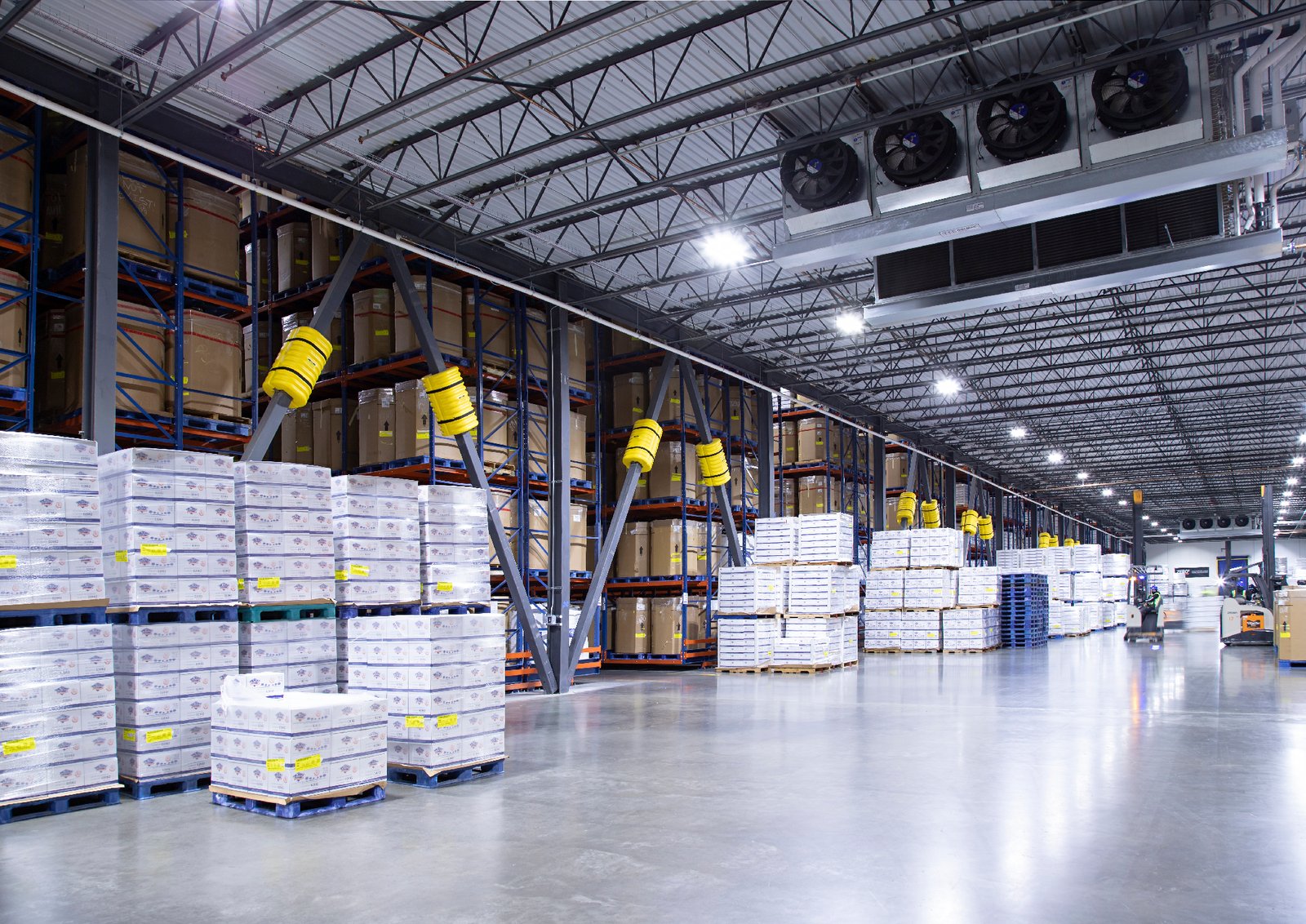
Space utilization affects performance too. High-rise racking systems help increase storage capacity without expanding floor area. A warehouse with 10-meter racks can hold 25% more products than a 6-meter setup. Smart layout planning saves energy and time while ensuring products move efficiently through every stage.
High-Performance Insulation System
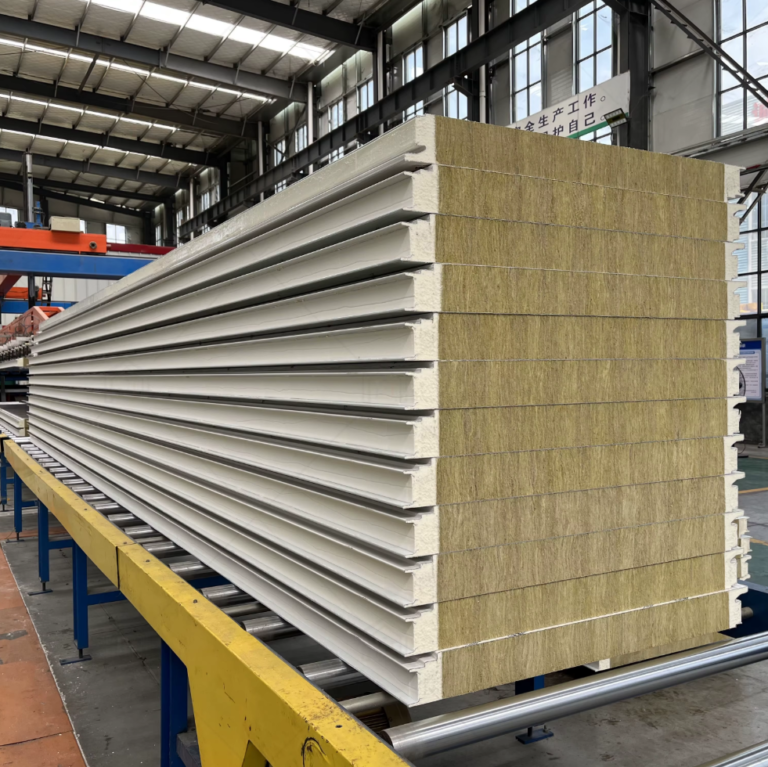
Insulation forms the backbone of any cold storage warehouse. It keeps the cold air in and warm air out. The most common materials include polyurethane (PU), polyisocyanurate (PIR), and rock wool panels. PU panels offer excellent thermal insulation with a thermal conductivity of about 0.022 W/m·K. PIR panels perform even better under fire conditions, making them a safe and efficient choice.
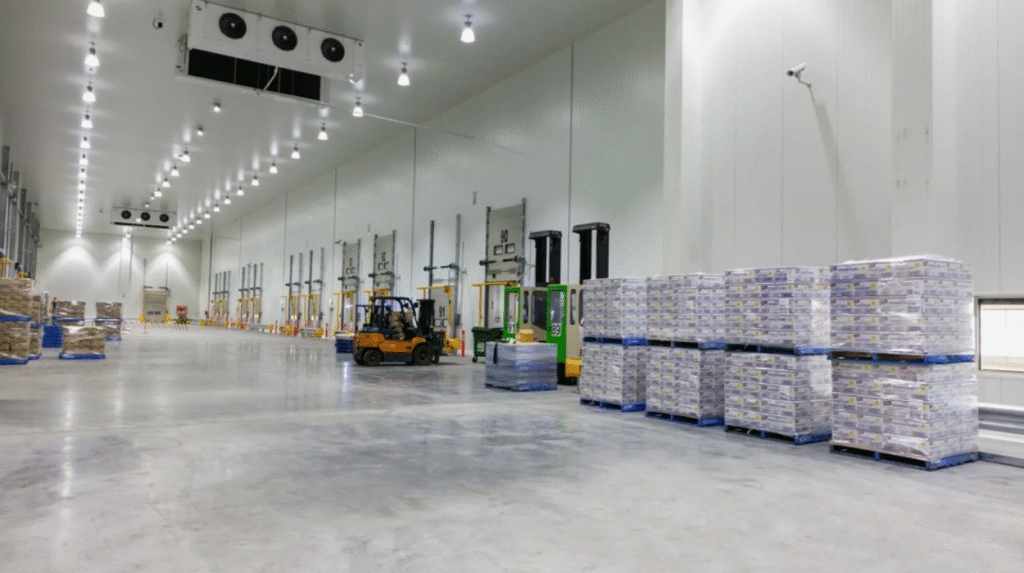
For example, a seafood cold room using 150 mm PU panels maintains a steady -20°C while using 10% less electricity compared to older EPS panels. Panel joints must fit tightly to stop air leaks. Even small gaps can cause condensation and frost buildup, which damages products and shortens equipment life.
The panel thickness depends on temperature needs. A freezer room usually uses 120–150 mm panels, while a chiller uses 75–100 mm. By selecting the right insulation material and thickness, designers ensure stable temperatures and lower energy costs over time.
Efficient Refrigeration System Design
The refrigeration system is the heart of a cold storage warehouse. It keeps the room temperature within a precise range. The system includes compressors, condensers, evaporators, and control units. Choosing the right system affects both energy use and product safety.
A direct expansion system works well for small warehouses because it responds quickly to temperature changes. Large warehouses often use an ammonia-based centralized system for better energy performance. For instance, a 3,000 m² cold warehouse with ammonia refrigeration can save up to 20% energy compared to a DX system.
Designers must also consider equipment placement. Compressors should stay in a well-ventilated machine room. Evaporators should be positioned to allow even air circulation. Poor placement can create “hot spots” where products spoil. Using variable-speed compressors and advanced controls helps maintain steady temperatures while reducing electricity costs. A smart monitoring system alerts operators to any fault before it affects storage quality.
Humidity and Airflow Management
Controlling humidity is as important as controlling temperature. Improper humidity causes ice buildup or product dehydration. For example, frozen meat stores best at 90–95% relative humidity, while fruits prefer around 85–90%. The system should maintain the right humidity level for each product type.
Airflow also influences temperature consistency. Cold air must circulate evenly across the room. Evaporator fans should not blow directly on sensitive goods like flowers or leafy vegetables. Designers can install air deflectors or duct systems to spread air uniformly.
An automatic defrost system helps prevent ice formation on evaporator coils. A buildup of 2 mm of frost can reduce cooling efficiency by 10%. Dehumidifiers and drainage systems remove excess moisture from the air, keeping the warehouse dry and safe.
Energy Efficiency and Sustainability
Energy efficiency defines modern cold storage design. Cooling accounts for up to 70% of total energy consumption. Small improvements in design can lead to major savings. For example, LED lighting generates less heat than fluorescent lamps and reduces power use by 30%. Motion sensors can turn lights off when areas are not in use.
Installing energy-efficient compressors and fans also helps. A warehouse that upgrades to inverter compressors can cut electricity use by 20%. Solar panels on the roof supply renewable power and reduce grid dependence. A 1,000 m² warehouse with a 150 kW solar system can cover nearly 25% of its annual electricity demand.
Designers should also use heat recovery systems to reuse waste heat from compressors for defrosting or office heating. Proper insulation, sealed doors, and air curtains reduce cold loss. Combining these methods makes the warehouse more sustainable and lowers long-term costs.
Safety, Automation, and Maintenance
Safety and automation are key features of a modern cold storage warehouse. Workers often face extreme temperatures, so safety design matters. Anti-slip floors, insulated doors, and emergency alarms are essential. Regular training ensures employees know how to handle temperature changes safely.
Automation increases efficiency and reduces human error. Automated storage and retrieval systems (AS/RS) move goods faster and minimize door openings, which helps maintain stable temperatures. For instance, a warehouse using automated forklifts cut labor costs by 25% and reduced cooling loss by 15%.
Monitoring systems track temperature, humidity, and power usage in real time. Managers can access this data remotely to make quick adjustments. Preventive maintenance extends equipment life and avoids breakdowns. Cleaning condensers, checking refrigerant levels, and inspecting door seals each month helps keep the system efficient.
A good cold storage warehouse design combines smart layout, quality insulation, efficient refrigeration, balanced humidity, and strong energy management. A well-designed cold storage warehouse not only protects products but also drives business growth and energy savings for years to come.
Share this content: