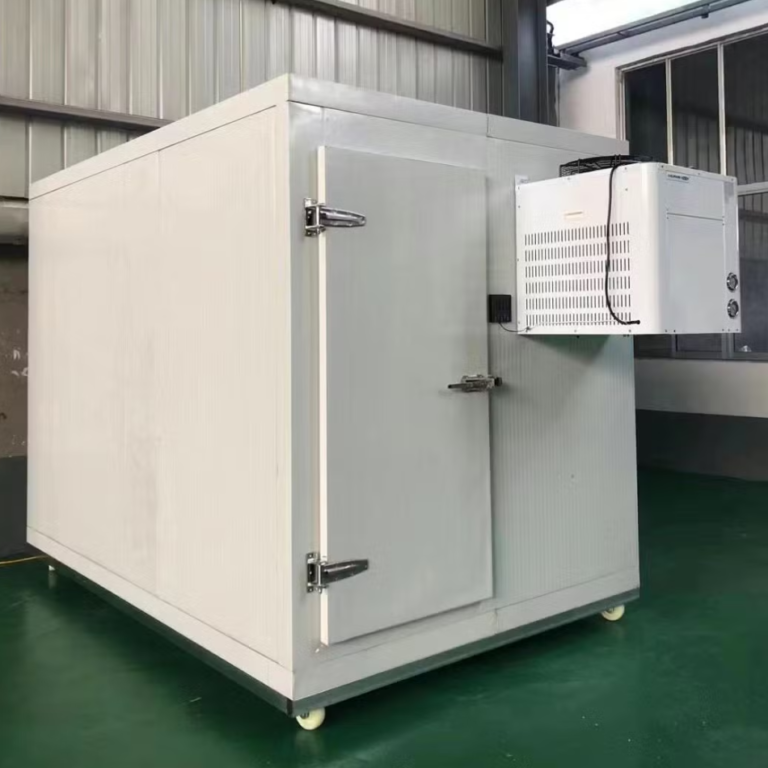
Chemical Cold Rooms for Hazardous Material Storage
Compared with ordinary food cold rooms, chemical cold rooms must satisfy far more complex technical and safety requirements. In addition to reliable refrigeration performance, they must address explosion prevention, corrosion resistance, leak control, and strict environmental protection standards. As integrated industries continue to grow, chemical cold rooms have become indispensable infrastructure for fine chemicals, new energy materials, and pharmaceutical intermediate production.
Complex Zoning Design in Chemical Cold Rooms
Chemical cold rooms require sophisticated zoning layouts due to the diversity of stored materials. Different chemicals demand different temperature ranges, storage conditions, and safety measures. To meet these requirements, large chemical cold rooms usually include at least two independent temperature zones.
Non-volatile raw materials such as resins, plastic pellets, and emulsions typically remain stable at moderate temperatures. These materials are commonly stored in zones maintained between 0°C and 15°C. This temperature range preserves material properties while minimizing energy consumption.

A second temperature zone operates between -18°C and 0°C. This area mainly stores flammable solvents with flash points below 60°C, as well as organic peroxides. Proper temperature control reduces vapor pressure and lowers ignition risks. Careful separation from other zones further enhances safety.
High-value materials such as electrolytes, lithium salts, and pharmaceutical intermediates usually require deeper refrigeration. These products are stored in low-temperature zones ranging from -30°C to -18°C. Stable low temperatures prevent chemical decomposition and extend shelf life. Such zones often include enhanced monitoring systems due to the high value of stored goods.
Stringent Refrigeration Performance Requirements
Chemical cold rooms place extremely high demands on refrigeration system stability. Products such as biological agents and pharmaceutical intermediates tolerate very limited temperature fluctuation. Even small deviations can cause irreversible quality loss.

To address this challenge, chemical cold rooms typically use dual-circuit refrigeration systems. Each circuit operates independently and provides redundancy. These systems maintain temperature fluctuations within ±0.5°C under normal conditions.
Even during unexpected power interruptions, the system can control temperature variation within 2°C for at least two hours. This capability provides valuable time for emergency response and protects sensitive materials from rapid deterioration.
Enhanced Safety Standards for Explosion Protection of Chemical Cold Rooms
Safety considerations play a central role in chemical cold room design. Explosion-proof chemical cold rooms require strict material selection and structural solutions. Wall systems commonly use polyurethane sandwich panels with a minimum thickness of 120 mm. These panels achieve a B1 fire rating and meet demanding safety standards.

The panels also provide strong thermal insulation. Their thermal conductivity does not exceed 0.18 W/(m²·K). This combination of insulation and fire resistance improves both energy efficiency and safety performance.
Roof structures usually adopt lightweight, high-strength color steel panels. In emergency situations, these roofs provide an explosion pressure relief area greater than 0.05 m² per cubic meter. Rapid rupture allows internal pressure to release quickly, which limits structural damage and reduces secondary hazards.
Electrical Safety and Anti-Static Measures
Chemical cold rooms rely heavily on explosion-proof electrical systems. Lighting fixtures, ventilation fans, and junction boxes must all meet ATEX certification requirements. These components reduce ignition risks in flammable atmospheres.

Designers route electrical cables through concealed steel conduits to prevent static electricity accumulation. The grounding resistance remains below 4 Ω. Effective grounding significantly reduces the risk of electrostatic discharge during operation.
Specialized Floor Systems and Corrosion Resistance
The floor system of a chemical cold room also requires special engineering. Floors must resist corrosion, prevent slipping, and block liquid leakage. Installers typically apply a conductive vinyl ester fiberglass reinforced plastic layer with a thickness of at least 4 mm.
This floor system achieves surface resistance between 10⁶ and 10⁹ Ω. It performs reliably at temperatures down to -30°C. At the same time, it resists acid and alkali corrosion common in chemical environments. These properties support long-term safe operation.
Specialized Refrigeration, Ventilation, and Gas Treatment Systems

For safety and reliability, chemical cold rooms usually operate with two independent refrigeration systems. When one system encounters a fault, the second system continues operation. Engineers select corrosion-resistant evaporators with copper tubes and aluminum fins. Refrigerants often include environmentally compliant options such as R507A or R449A.
Ventilation also plays a critical role. Chemical cold rooms achieve no fewer than six air changes per hour. Designers place exhaust outlets at least 1.5 meters above roof level. Facilities install explosion-proof fans and gas concentration detectors throughout the space.
When combustible gas concentration reaches 20% of the lower explosive limit, ventilation systems start automatically. At 40% LEL, refrigeration units shut down and alarms activate. These measures significantly reduce explosion risks.

Because refrigeration systems using electrolytes may release HF or HCl gases, chemical cold rooms also include scrubbing towers. Alkaline absorption systems treat exhaust gases. Emissions only discharge after meeting national and regional standards.
Construction Costs and Operating Expenses of Chemical Cold Rooms
The advanced technical requirements of explosion-proof chemical cold rooms significantly increase construction costs. Industry surveys show that investments in explosion-proof walls, certified electrical systems, pressure relief roofs, gas detection equipment, and dual power supplies raise total costs by at least 35% compared with ordinary cold rooms.
Operating costs also increase due to complex monitoring and data management systems. Facilities install temperature and humidity sensors at a density of no less than one unit per 50 m². Monitoring systems upload data to cloud servers in real time and retain records for over five years.
When key parameters exceed limits, the system issues alarms within two minutes and activates sprinkler systems. Enterprises must also conduct regular maintenance and submit operation records to regulatory authorities. Periodic performance inspections under international standards ensure long-term safety in chemical storage and production.
Share this content: