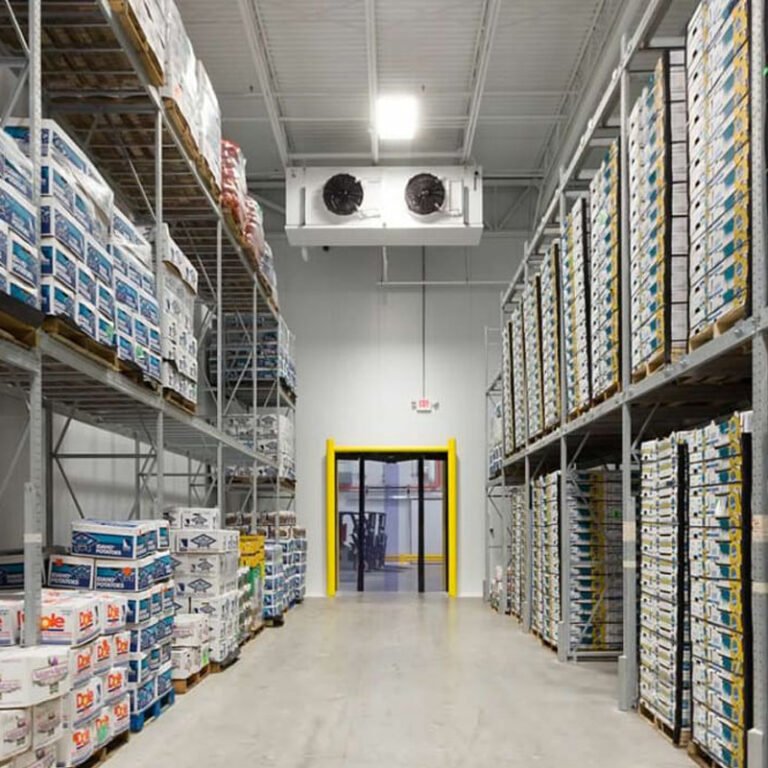
Modular Cold Room For Higher Return On Investment
Modular cold room plays a critical role in food preservation, pharmaceuticals, and logistics. Growing global demand for temperature-controlled storage continues to expand this market. According to the Global Cold Chain Alliance, global cold storage capacity exceeded 720 million cubic meters in 2024. Modular cold room stands out due to flexibility, fast installation, and stable thermal performance.
Structure and Core Components of Modular Cold Rooms
A modular cold room consists of prefabricated insulated panels, refrigeration systems, control units, and sealing accessories. Insulated panels usually adopt polyurethane or PIR foam cores. According to the actual requirements for cooling temperature, standard panel thickness ranges from 75 mm to 200 mm. A 100 mm polyurethane panel typically achieves a thermal conductivity of 0.022 W/m·K, which meets most medium-temperature storage needs.

Panel surfaces use color-coated steel or stainless steel. Steel thickness usually ranges from 0.4 to 0.6 mm. These materials resist corrosion and support frequent cleaning. Cam-lock or hook-lock systems connect panels tightly. This structure limits air leakage to below 0.5 m³/m²·h under standard pressure testing.
Refrigeration systems form the functional core. Common compressor types include scroll and semi-hermetic piston units. Cooling capacity often ranges from 3 kW to 50 kW per system. Medium-temperature cold rooms operate between 0°C and 5°C. Low-temperature cold rooms reach −18°C to −25°C. Digital controllers maintain temperature accuracy within ±0.5°C.
Doors also influence performance. Hinged or sliding doors usually contain heated door frames. This design prevents frost formation when operating below −10°C. Proper component integration ensures stable operation and long service life.

Key Advantages of Modular Cold Room Systems
Modular cold rooms deliver significant construction efficiency. Factory-prefabricated panels reduce on-site work. Thanks to precisely manufactured prefabricated insulation panels and the number of construction teams, a 100 m² modular cold room usually completes installation within 3–7 days. Traditional concrete cold rooms often require more than 30 days. Faster delivery lowers labor costs by about 25%.
Flexibility represents another core advantage. Modular systems allow easy expansion or relocation. Users can increase storage volume by adding panels and upgrading refrigeration capacity. This adaptability suits seasonal food storage and growing logistics operations.

Energy efficiency remains a major benefit. High-density polyurethane foam reaches densities of 40–45 kg/m³. This structure reduces heat transfer and lowers compressor runtime. Studies show modular cold rooms can reduce energy consumption by 15–20% compared with brick-built cold storage under identical conditions.
Hygiene control also improves. Smooth metal surfaces limit bacterial growth. Cold rooms used for food storage often comply with HACCP standards. Proper sealing prevents condensation and mold formation. This feature supports safe storage of meat, dairy, fruits, and vegetables.
Cost control further strengthens market appeal. Modular cold rooms typically reduce initial investment by 10–20% compared with traditional cold storage buildings. Predictable material usage and standardized production help control budgets accurately.

Installation, Maintenance, and Service Life
Professional installation ensures long-term reliability. Installers must level the foundation within ±5 mm over 10 meters. Uneven bases cause panel stress and air leakage. Installers should tighten cam-locks evenly to maintain panel alignment.
Sealing work requires special attention. Installers apply food-grade silicone at all panel joints. Vapor barriers must remain continuous, especially in low-temperature cold rooms. Poor sealing increases frosting and raises energy consumption by up to 30%.

Refrigeration system commissioning follows installation. Technicians must vacuum the system below 500 microns before refrigerant charging. Correct refrigerant charge improves compressor efficiency and reduces wear. Typical refrigerants include R404A, R448A, and R507A, depending on regional regulations.
Routine maintenance extends service life. Users should clean condensers monthly to maintain heat exchange efficiency. Door gaskets require inspection every six months. Proper maintenance allows modular cold rooms to operate reliably for 15–20 years.
Steel panel surfaces with anti-corrosion coatings resist rust in humid environments. With correct use and maintenance, insulation performance degradation remains below 5% over ten years. This durability supports long-term operational stability.

Modular cold rooms offer efficient, flexible, and energy-saving cold storage solutions. Standardized components simplify design and installation. Accurate thermal parameters ensure stable temperature control. With fast construction, lower costs, and long service life, modular cold rooms continue to support global cold chain development across food, pharmaceutical, and logistics industries.
Choose a service provider carefully
The advantages of modular cold storage lie mainly in convenient construction and high economic efficiency. This places higher demands on providers of cold storage solutions.

On one hand, providers need to have a certain level of resource integration capability within the cold storage industry chain. This makes it easier for providers to procure various components and meet the customized needs of users in one go, especially in terms of data monitoring and safety alarms.
On the other hand, providers need to have rich design experience and be able to strictly control the quality and details of each component. In the construction of cold storage, unless it is a large warehouse with a high height that requires an elevator, the most time-consuming part is generally the assembly of the cold storage structure. The length of the cold storage panels and the accuracy of the hook positions directly determine the smoothness of the construction.

Additionally, if the design of the storage body does not perfectly match the dimensions and weight of core components such as cold air machines and condensers, it can cause construction obstacles or safety hazards. This places higher demands on the provider’s understanding of related products.
Harbin Dong`an Building Materials Co., Ltd. is a leading cold storage solution provider in China. The company has advanced production lines for cold storage panels, which can accurately control the processing precision of the panels. At the same time, the company has extensive cold storage design experience and can configure cost-effective components according to user needs, accelerating construction efficiency.
Share this content: